Infants spend more time on floors and surfaces than any other age group. They mouth objects, press their faces into fabric, and breathe air at floor level — where cleaning product residues and VOCs concentrate. The cleaning products you use in a home with a baby matter more than in any other household context, and the gap between "labeled baby-safe" and "actually safe" is significant.
This guide covers what makes a cleaning product genuinely safe for infant environments, which certified products are worth using, which product categories to avoid entirely, and how to clean the specific areas of your home — nursery, kitchen, bathroom, laundry — in a way that protects infant health rather than compromising it.
Why Conventional Cleaning Products Are Riskier for Infants
Infants are not small adults when it comes to chemical exposure. Their bodies process toxins differently, their respiratory systems are still developing, and their behavior — mouthing objects, crawling on floors — creates exposure pathways that don't apply to adults. Three specific factors make conventional cleaning products more concerning in infant environments.
Higher Exposure Per Body Weight
Infants breathe more air per unit of body weight than adults — approximately twice as much. This means that for the same indoor VOC concentration, an infant receives a proportionally higher dose than an adult in the same room. The EPA's reference doses for chemical exposure are calculated for adult body weights; infants are more vulnerable at the same concentration levels.
Floor-Level Concentration
Many VOCs and cleaning product residues are heavier than air and concentrate at floor level — exactly where infants spend most of their time. A 2019 study published in Environmental Science & Technology found that infants crawling on recently cleaned carpet were exposed to significantly higher concentrations of cleaning product residues than adults walking in the same space.
Developing Immune and Respiratory Systems
The first two years of life are a critical window for immune system and respiratory development. Exposure to respiratory irritants — chlorine gas, ammonia, synthetic fragrances — during this window has been associated with increased risk of asthma and allergic sensitization in later childhood. The American Academy of Pediatrics recommends minimizing infant exposure to indoor air pollutants, including those from cleaning products.
Ready for a Spotless Home?
Get a free, no-obligation estimate in 60 seconds. Eco-friendly products, Greentified™ re-clean guarantee, and a team you can trust.
Get My Free Estimate →6 Baby-Safe Cleaning Products Worth Using
All products below are EPA Safer Choice certified or EWG Verified — verified against third-party databases, not marketing claims. All are fragrance-free or available in fragrance-free versions.
Room-by-Room Baby-Safe Cleaning Guide
Nursery
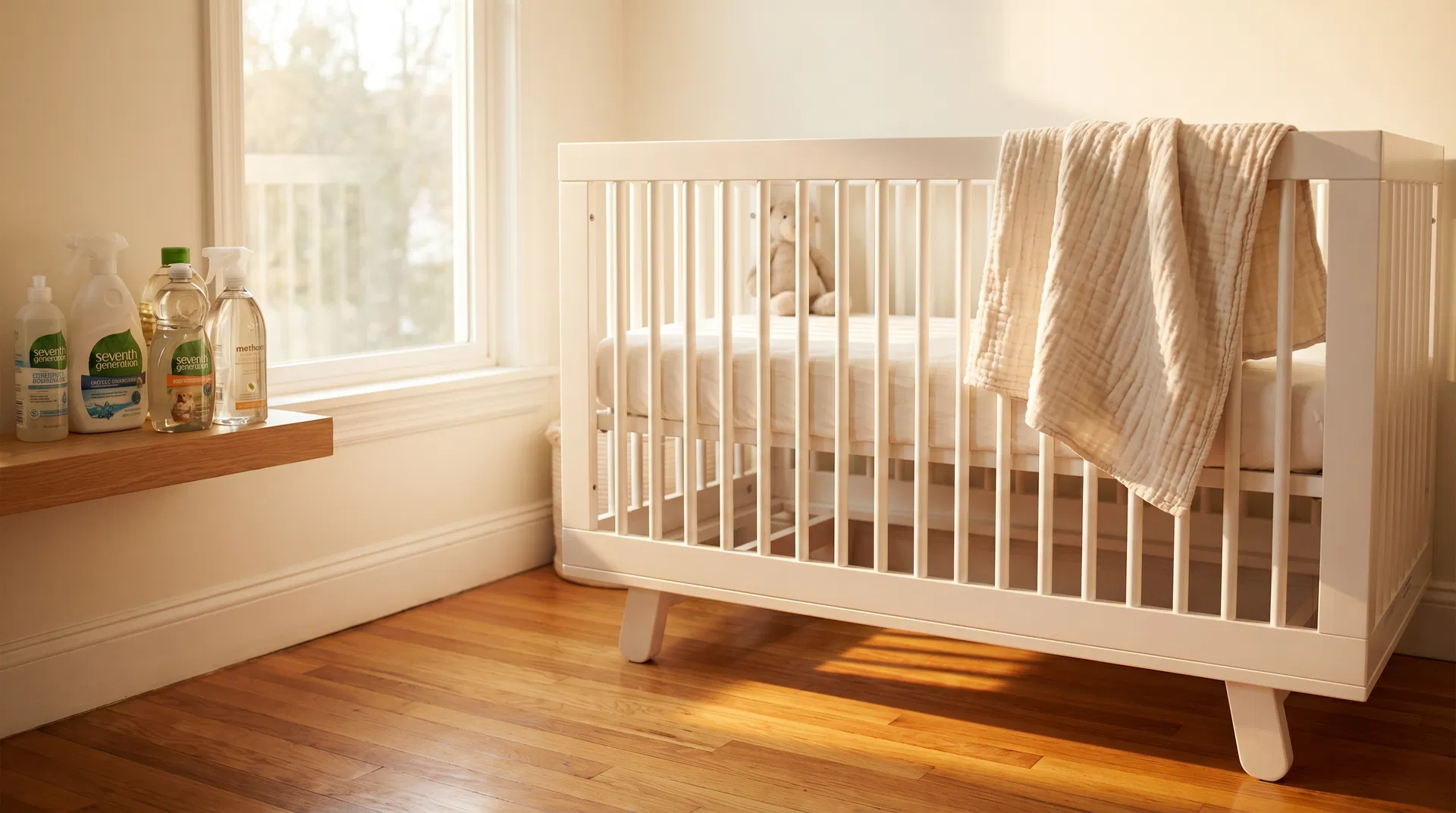
The nursery requires the most careful approach. Use only fragrance-free, EPA Safer Choice certified products. Clean the crib mattress with a damp microfiber cloth and diluted Branch Basics — never spray products directly onto the mattress. Vacuum with a HEPA-rated vacuum weekly. Wash all bedding in Seventh Generation Free & Clear. Ventilate the room during and after cleaning. Avoid air fresheners and scented candles entirely.
Kitchen and High Chair
High chair trays and kitchen surfaces that contact baby food require food-safe cleaning. Method Baby All-Purpose Cleaner is specifically formulated for this purpose. For the high chair, clean after every use with a damp microfiber cloth and Method Baby spray. For kitchen countertops where baby food is prepared, 3% hydrogen peroxide is an effective, food-safe disinfectant that breaks down to water and oxygen.
Bathroom
For the baby's bath area, clean the tub with Branch Basics or Seventh Generation Bathroom Cleaner (fragrance-free). For bath toys, soak weekly in a white vinegar solution to prevent mold — rinse thoroughly before use. Avoid disinfectant wipes on surfaces babies touch; they leave quaternary ammonium residue that can transfer to infant skin.
Floors
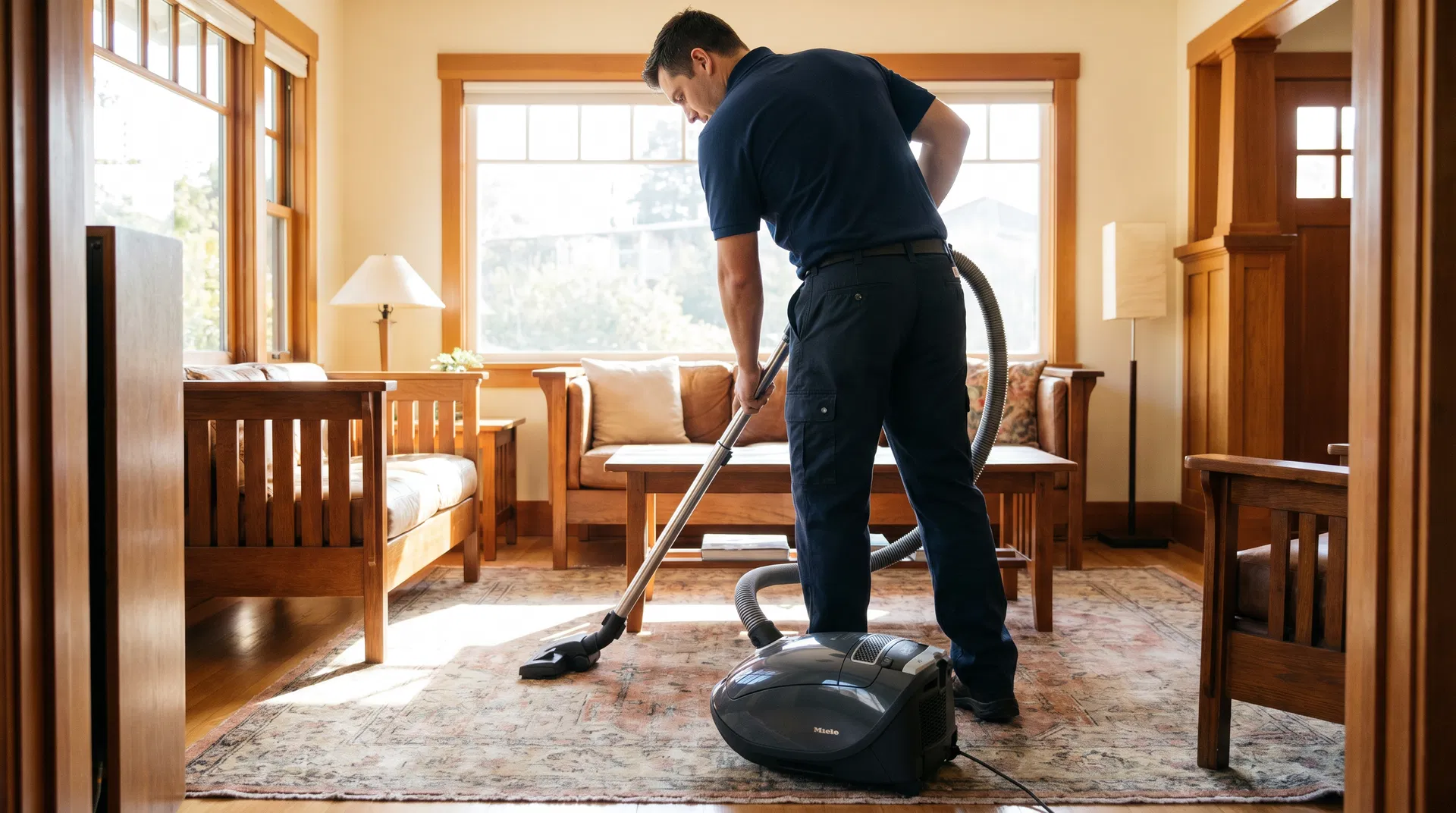
Floors are the highest-priority surface in a home with a crawling infant. Vacuum with a HEPA-rated vacuum before mopping — standard vacuums redistribute fine particles rather than capturing them. Mop with a diluted Branch Basics or ECOS Floor Cleaner solution. Allow floors to dry completely before allowing infant floor contact — wet floors concentrate cleaning product residue.
Frequently Asked Questions
Let Green Planet Handle the Cleaning
Family-owned since 2010. 100% eco-friendly. Greentified™ Guarantee — if you're not happy, we re-clean for free within 24 hours.
Serving Marin County, San Francisco, Sonoma, Napa, San Mateo & Contra Costa.