Chlorine bleach works. That's the honest starting point for any discussion of bleach alternatives. Sodium hypochlorite kills bacteria, viruses, and mold effectively, and it's been doing so for over a century. The question is not whether bleach works — it's whether the trade-offs are worth it: chlorine gas production when mixed with ammonia or acids, respiratory irritation, surface damage to fabrics and metals, aquatic toxicity, and the formation of chlorinated byproducts in wastewater.
For most household cleaning tasks, there are bleach alternatives that match or exceed bleach's effectiveness without these trade-offs. This guide covers the eight most effective alternatives, what each one is best for, and the specific products worth buying — verified against EPA Safer Choice and EWG databases.
8 Bleach Alternatives That Actually Work
The table below covers the most effective bleach alternatives for household use, ranked by the tasks they perform best. Effectiveness ratings are based on peer-reviewed research and EPA/CDC efficacy data, not marketing claims.
| Alternative | Best For | Effectiveness | Eco-Safe | Key Notes |
|---|---|---|---|---|
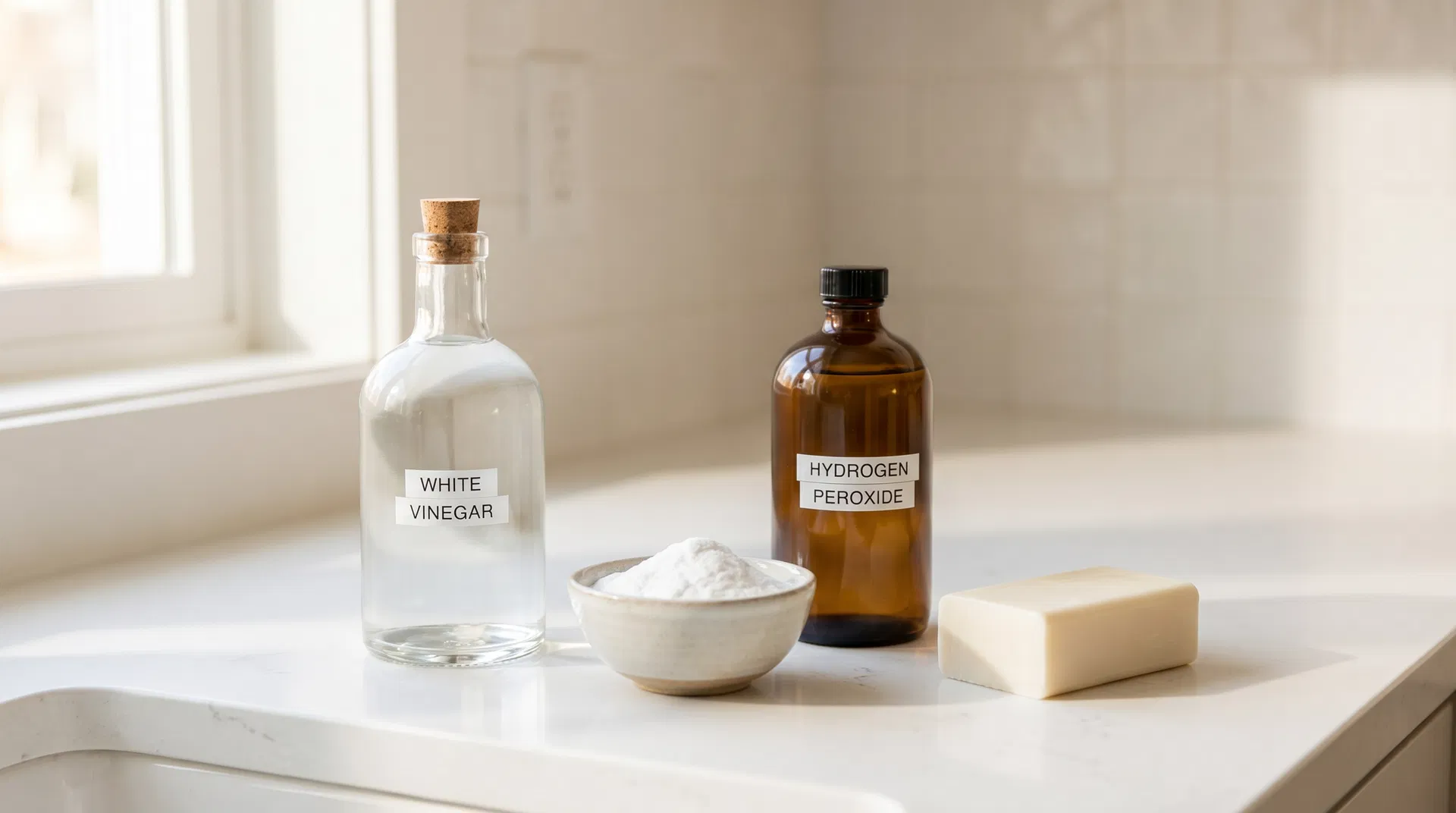
| Hydrogen peroxide (3%) | Disinfecting, mold, whitening | ★★★★★ | Yes | Breaks down to water and oxygen. Kills 99.9% of bacteria. Light-sensitive — store in dark bottle. |
| White vinegar (undiluted) | Mold, mineral deposits, deodorizing | ★★★★☆ | Yes | 5% acetic acid. Effective against mold and bacteria. Not a registered disinfectant — does not kill all pathogens. |
| Baking soda + hydrogen peroxide | Grout whitening, tough stains | ★★★★★ | Yes | Paste form for scrubbing. Oxygen-bleaching action whitens without chlorine. |
| Branch Basics Oxygen Boost | Laundry whitening, grout, stains | ★★★★★ | Yes | Sodium percarbonate — releases hydrogen peroxide when dissolved. EPA Safer Choice certified. |
| Seventh Generation Disinfecting Spray | Surface disinfection | ★★★★☆ | Yes | Thymol (thyme oil) based. EPA registered disinfectant. Kills 99.99% of bacteria. Safer Choice certified. |
| Biokleen Bac-Out | Organic stains, odors, mold | ★★★★☆ | Yes | Enzyme-based. Particularly effective for pet urine, food stains, and organic odors. |
| Tea tree oil solution (2%) | Mold prevention, antibacterial | ★★★☆☆ | Yes* | Effective against mold spores. *Toxic to pets — use with caution in pet households. |
| Sodium percarbonate (OxiClean type) | Laundry whitening, stain removal | ★★★★★ | Yes | Oxygen bleach. Whitens without chlorine. Safe for colors. Breaks down to water, oxygen, and soda ash. |
Ready for a Spotless Home?
Get a free, no-obligation estimate in 60 seconds. Eco-friendly products, Greentified™ re-clean guarantee, and a team you can trust.
Get My Free Estimate →Room-by-Room Guide to Replacing Bleach
Bathroom: Grout, Mold, and Toilet Disinfection
Bathrooms are where most people reach for bleach — and where the alternatives perform best. For grout whitening, a paste of baking soda and 3% hydrogen peroxide applied with a grout brush and left for 30 minutes whitens as effectively as bleach without the fumes. For toilet bowl disinfection, Seventh Generation Disinfecting Bathroom Cleaner (thymol-based) is an EPA registered disinfectant that kills 99.99% of bacteria. For shower mold, undiluted white vinegar sprayed and left for 1 hour kills approximately 82% of mold species — follow with a hydrogen peroxide spray for the remainder.
Kitchen: Food-Safe Disinfection
Kitchen surfaces require food-safe disinfection — a category where bleach is actually overkill for most tasks. For countertops, cutting boards, and sink areas, a 3% hydrogen peroxide spray (10-minute contact time) kills E. coli, Salmonella, and Listeria effectively. For food-contact surfaces, hydrogen peroxide is actually safer than bleach because it leaves no chemical residue after it decomposes. For heavy grease, Branch Basics Concentrate (plant-based surfactant) cuts grease as effectively as conventional degreasers without chlorine.
Laundry: Whitening Without Chlorine
Oxygen bleach (sodium percarbonate) is the definitive bleach alternative for laundry. Branch Basics Oxygen Boost or Seventh Generation Chlorine Free Bleach added to the wash cycle whitens whites, removes stains, and brightens colors without the fiber damage and color stripping of chlorine bleach. For tough stains, pre-soak in a solution of oxygen bleach and warm water for 30–60 minutes before washing.
Floors and Hard Surfaces: General Disinfection
For general floor and hard surface disinfection, Method All-Purpose Cleaner (EPA Safer Choice certified) or Seventh Generation Multi-Surface Cleaner provide effective cleaning without bleach. For higher-risk disinfection (illness recovery, pet accidents), Seventh Generation Disinfecting Multi-Surface Cleaner (thymol-based, EPA registered) provides genuine disinfection without chlorine.
Why California Households Should Avoid Chlorine Bleach
California's Air Resources Board identifies chlorine bleach as a source of indoor air pollution. When bleach is used in enclosed spaces — which describes most San Francisco apartments — it releases chlorine gas and chloramines that irritate the respiratory system. The BAAQMD (Bay Area Air Quality Management District) has documented that indoor cleaning product use is a significant source of VOC emissions in the Bay Area, contributing to ozone formation and respiratory health issues.
For Bay Area households, switching from chlorine bleach to hydrogen peroxide-based and enzyme-based alternatives is not just a personal health choice — it's a contribution to regional air quality. The alternatives in this guide are all CARB-compliant and produce no chlorinated air pollutants.
Frequently Asked Questions
Let Green Planet Handle the Cleaning
Family-owned since 2010. 100% eco-friendly. Greentified™ Guarantee — if you're not happy, we re-clean for free within 24 hours.
Serving Marin County, San Francisco, Sonoma, Napa, San Mateo & Contra Costa.