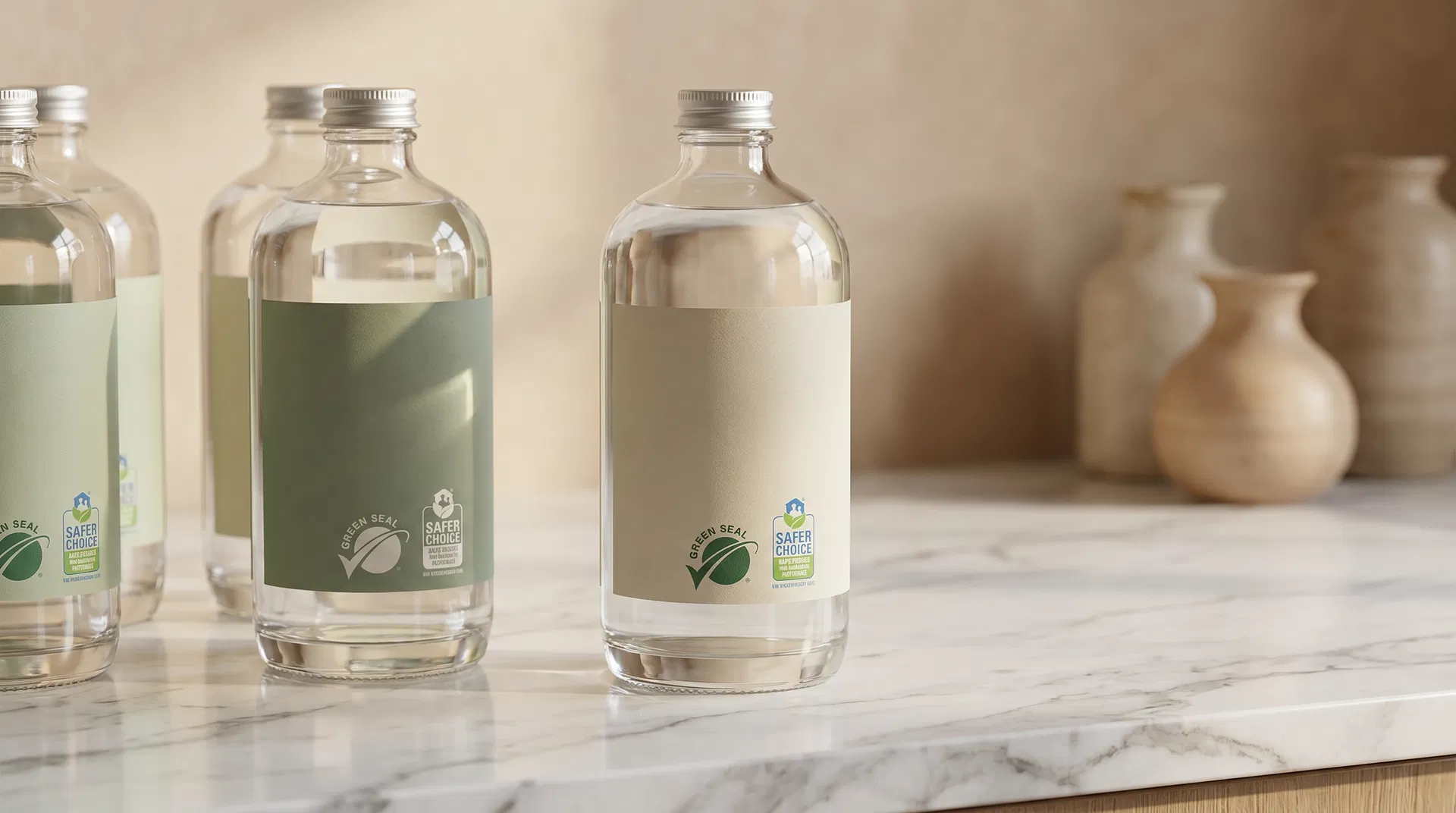
The green cleaning industry has a certification problem. Dozens of labels, logos, and claims compete for consumer attention — EPA Safer Choice, EWG Verified, USDA Biobased, Green Seal, LEED Compliant, Leaping Bunny — and most consumers have no framework for evaluating which ones are rigorous, which are marketing, and which are irrelevant to the question of whether a product is actually safe to use in your home.
This guide cuts through the noise. It explains what each major green cleaning certification actually requires, ranks them by rigor, and gives you a practical framework for evaluating whether a cleaning service or product is genuinely eco-friendly — or just using the right language.
Green Cleaning Certifications Ranked by Rigor
The table below covers every major certification you'll encounter when evaluating cleaning products and services. The "Rigor" rating reflects the depth of the standard's requirements — not the difficulty of obtaining it.
| Certification | Issuer | Scope | Rigor | What It Actually Means |
|---|---|---|---|---|
| EPA Safer Choice | US Environmental Protection Agency | Individual products | ★★★★★ | Every ingredient evaluated for human and environmental safety. Fewer than 2,000 products certified nationwide. The gold standard for cleaning product safety. |
| EWG Verified | Environmental Working Group | Individual products | ★★★★☆ | EWG's own database-based certification. Requires full ingredient disclosure and prohibits EWG-flagged chemicals. Strong but slightly less rigorous than EPA Safer Choice. |
| USDA Certified Biobased | US Dept. of Agriculture | Individual products | ★★★☆☆ | Certifies that a product contains a specified percentage of biobased content. Does not evaluate safety — a biobased product can still contain harmful ingredients. |
| Green Seal GS-37 | Green Seal | Commercial cleaning services | ★★★★★ | The most rigorous certification for cleaning service companies. Requires product standards, training, equipment, and management systems. Very few residential services hold this. |
| LEED Compliant | US Green Building Council | Products used in LEED buildings | ★★★☆☆ | Products must meet VOC limits and other criteria for use in LEED-certified buildings. A useful benchmark but not a standalone safety certification. |
| NSF/ANSI 61 | NSF International | Products contacting drinking water | ★★★★☆ | Relevant for products used near water systems. Strong safety standard but narrow scope. |
| Leaping Bunny | Coalition for Consumer Information on Cosmetics | Products (cruelty-free) | ★★★☆☆ | Certifies no animal testing. Does not evaluate ingredient safety or environmental impact. |
| B Corp Certified | B Lab | Companies (not products) | ★★★★☆ | Evaluates overall company social and environmental performance. Meaningful for evaluating a cleaning service company's values but does not certify specific products. |
Ready for a Spotless Home?
Get a free, no-obligation estimate in 60 seconds. Eco-friendly products, Greentified™ re-clean guarantee, and a team you can trust.
Get My Free Estimate →The Two Certifications That Actually Matter
Of the eight certifications in the table above, two stand out as genuinely meaningful for consumers evaluating cleaning products and services: EPA Safer Choice (for products) and Green Seal GS-37 (for service companies). Everything else is either narrower in scope, less rigorous in its requirements, or not relevant to cleaning safety.
EPA Safer Choice: The Product Gold Standard
EPA Safer Choice certification requires every ingredient in a product — including fragrance components, which are typically exempt from disclosure requirements — to be evaluated against EPA's Safer Chemical Ingredients List. Ingredients are rated on a traffic-light system: green (preferred), yellow (use with caution), and red (not allowed). A product cannot receive Safer Choice certification if it contains any red-rated ingredients.
The program is run by the US Environmental Protection Agency and the database is publicly searchable at saferchoice.epa.gov. As of 2026, fewer than 2,000 products carry this certification — a small fraction of the cleaning products market. When a cleaning service tells you they use EPA Safer Choice certified products, you can verify the specific products in the database in under 60 seconds.
Green Seal GS-37: The Service Company Standard
Green Seal GS-37 is the only major certification that applies to cleaning service companies rather than individual products. It requires certified services to: use only Green Seal or EPA Safer Choice certified products; train all employees on proper product use and dilution; use HEPA-filtered equipment; implement a management system for tracking chemical use; and undergo third-party audits. Very few residential cleaning services hold this certification — it represents a genuine operational commitment, not just a product swap.
Greenwashing: What to Watch For
The Federal Trade Commission's Green Guides (16 CFR Part 260) provide guidance on environmental marketing claims, but enforcement is limited and the cleaning industry is rife with misleading labels. Here are the most common greenwashing patterns to watch for.
Frequently Asked Questions
Let Green Planet Handle the Cleaning
Family-owned since 2010. 100% eco-friendly. Greentified™ Guarantee — if you're not happy, we re-clean for free within 24 hours.
Serving Marin County, San Francisco, Sonoma, Napa, San Mateo & Contra Costa.