Every home gets stains. Red wine on the sofa during a dinner party in Noe Valley. Coffee on the linen curtains in a Mill Valley craftsman. Grass on the kids' uniforms after a Saturday in Marin. The instinct is to reach for the strongest product under the sink — but most conventional stain removers contain optical brighteners, synthetic fragrances, and chlorine bleach that leave chemical residue on surfaces your family touches every day. The good news: a complete stain removal guide using eco-friendly methods works just as well — often better — because plant-based enzymes and mild acids break down the molecular structure of stains rather than just bleaching them invisible.
At Green Planet Cleaning, we've been removing stains from Bay Area homes for 15+ years using nothing but plant-based, non-toxic products. This guide covers 30+ stain types, the five core eco-friendly ingredients that handle almost all of them, and the single most important rule that determines whether a stain comes out or sets permanently.
The One Rule That Determines Everything
Before any ingredient or technique: cold water, blot — never rub, never hot water. Heat sets protein-based stains (blood, egg, dairy, sweat) permanently by denaturing the proteins into the fabric fibres. Rubbing spreads the stain laterally and pushes it deeper into the weave. Every professional cleaner's first move is a cold-water blot with a clean white cloth, working from the outside edge of the stain inward. This one habit saves more stains than any product.
The second rule: identify the stain type before treating. Protein stains (blood, egg, dairy) need cold water and enzyme cleaners. Tannin stains (coffee, tea, red wine) respond to white vinegar and dish soap. Oil-based stains (grease, lipstick, butter) need an absorbent first (baking soda) then a surfactant (castile soap). Treating a protein stain with hot water or a tannin stain with bleach makes it worse.
The 5 Eco-Friendly Ingredients That Handle Almost Everything
You don't need a cabinet full of single-use stain products. These five ingredients — all non-toxic, all available at any Bay Area grocery store — cover the vast majority of household stains when used correctly.
Ready for a Spotless Home?
Get a free, no-obligation estimate in 60 seconds. Eco-friendly products, Greentified™ re-clean guarantee, and a team you can trust.
Get My Free Estimate →30+ Stains: Eco Treatment Reference Table
The table below covers the most common household stains, the correct eco-friendly treatment for each, and the key timing rule that makes the difference between success and a permanent set. All treatments use the five core ingredients above — no proprietary formulas, no toxic chemicals.
| Stain Type | Surface | Eco Treatment | Key Timing Rule | Toxicity |
|---|---|---|---|---|
| Red wine | Fabric / carpet | Club soda + white wine vinegar + cold water blot | Act immediately | None |
| Coffee | Fabric / countertop | Cold water + dish soap; baking soda paste for set stains | Within 10 min | None |
| Grease / cooking oil | Fabric / tile | Baking soda absorb, then castile soap + warm water | Blot first | None |
| Blood | Fabric / grout | Cold hydrogen peroxide (3%) — never hot water | Cold only | None |
| Ink / ballpoint | Fabric | Rubbing alcohol on a cloth, blot outward | Before drying | Low |
| Grass | Fabric | White vinegar soak 30 min, then castile soap scrub | Pre-treat | None |
| Sweat / deodorant | Fabric | Baking soda + lemon juice paste, 1 hr soak | Pre-treat | None |
| Tomato / ketchup | Fabric / plastic | Cold water rinse, then dish soap + white vinegar | Rinse first | None |
| Candle wax | Fabric / wood | Freeze with ice pack, chip off, then iron over paper bag | Freeze first | None |
| Pet urine | Carpet / hardwood | Enzyme cleaner (Biokleen) or white vinegar + baking soda | Blot, don't rub | None |
| Mold / mildew | Grout / tile | White vinegar spray, 1 hr dwell, scrub with baking soda | Ventilate | None |
| Hard water / limescale | Glass / fixtures | Undiluted white vinegar soak or lemon juice + salt paste | 30 min dwell | None |
| Rust | Porcelain / fabric | Lemon juice + salt paste, sun-dry; Bar Keepers Friend for porcelain | Sun helps | Low |
| Marker / crayon | Wall / fabric | Baking soda paste on wall; rubbing alcohol on fabric | Test first | Low |
| Mud | Fabric / carpet | Let dry completely, brush off, then castile soap + cold water | Dry first! | None |
Room-by-Room Stain Prevention in Bay Area Homes
San Francisco and Marin County homes have specific stain challenges that differ from homes in drier climates. The coastal humidity accelerates mildew growth on grout and caulk. Redwood pollen from Marin's tree canopy leaves a fine orange-brown dust on window sills and exterior-facing surfaces that stains painted wood if left for more than a few days. Salt air in Tiburon and Belvedere oxidises metal fixtures faster than inland homes, leaving rust streaks on porcelain sinks and shower trays.
Kitchen
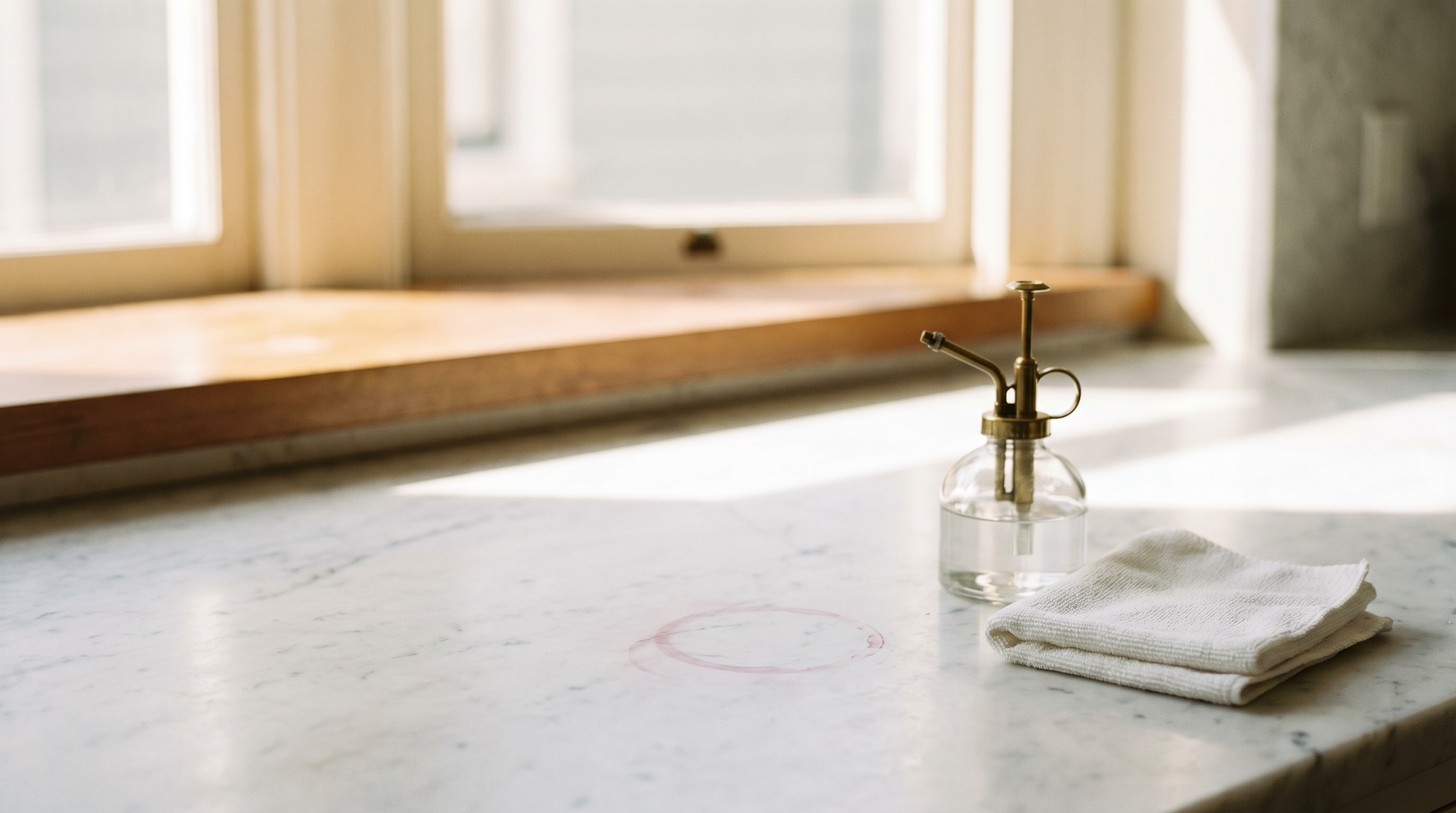
The most common kitchen stains are cooking oil splatter on backsplash tile, coffee rings on quartz countertops, and tomato sauce on grout lines. For oil splatter, apply baking soda dry to absorb the oil, wait 10 minutes, then wipe with a castile soap solution. Quartz countertops are non-porous and respond well to a 50/50 white vinegar and water spray — but never use vinegar on marble or granite, which are acid-sensitive. For grout, a baking soda paste applied with an old toothbrush and left for 20 minutes before scrubbing removes most food staining without bleach.
Bathrooms
Hard water limescale on glass shower doors is the most persistent bathroom stain in the Bay Area, where municipal water has moderate mineral content. Undiluted white vinegar applied with a spray bottle and left for 30–60 minutes dissolves calcium carbonate deposits without scratching glass. For mildew on grout and caulk — common in SF's foggy microclimate — a white vinegar spray left for one hour followed by a baking soda scrub removes surface mildew. Persistent black mildew that has penetrated the grout may require professional re-grouting.
Living Areas and Upholstery
Red wine on upholstery is the most feared stain in any Bay Area home. The correct sequence: blot immediately with a clean white cloth (never rub), pour club soda to dilute and lift the stain, then apply a 50/50 white vinegar and cold water solution and blot again. For set wine stains (discovered the next morning), a paste of baking soda and a small amount of dish soap applied for 30 minutes before blotting can still lift significant colour. The Biokleen Bac-Out enzyme cleaner is the most effective plant-based option for set organic stains on upholstery and carpet.
Carpets
Pet urine is the most common carpet stain in Bay Area homes with dogs or cats. The critical step is blotting up as much liquid as possible immediately — a stack of paper towels weighted with a heavy book for 5 minutes removes more urine than any product. Then apply an enzyme cleaner (Biokleen Bac-Out or Nature's Miracle) and let it dwell for 15 minutes before blotting. Enzyme cleaners break down the uric acid crystals that cause the persistent odour — white vinegar neutralises the smell temporarily but does not eliminate the crystals. Never use steam cleaning on fresh pet urine stains — the heat sets the protein and the odour permanently.
3 DIY Eco Stain Remover Recipes We Use
These are the three formulas our cleaning teams use most frequently in Bay Area homes. All can be mixed in a standard spray bottle and stored for up to two weeks.
When to Call a Professional Cleaner
Most household stains respond to the eco treatments above when addressed promptly. There are four situations where professional intervention is the better choice: set stains that have been through a hot dryer cycle (heat has permanently bonded the stain to the fibres); large-area carpet staining from flooding or pet accidents (DIY treatment often spreads the contamination); mildew that has penetrated below the grout surface into the substrate; and stains on delicate natural fibres like silk, wool, or handwoven rugs where incorrect treatment causes irreversible damage.
Green Planet Cleaning's deep cleaning service includes targeted stain treatment as part of the standard scope — our teams carry Biokleen Bac-Out, Method dish soap, and white vinegar solutions on every visit. If you have a specific stain challenge in your San Francisco or Marin County home, request a free estimate and describe the stain — we'll advise on the best approach before the visit.
Frequently Asked Questions
Let Green Planet Handle the Cleaning
Family-owned since 2010. 100% eco-friendly. Greentified™ Guarantee — if you're not happy, we re-clean for free within 24 hours.
Serving Marin County, San Francisco, Sonoma, Napa, San Mateo & Contra Costa.