Hardwood floors are one of the most valuable features in Bay Area homes — and one of the most commonly damaged by well-intentioned cleaning. The two most widespread mistakes: using white vinegar (which etches the polyurethane finish) and steam mopping (which forces moisture into the wood grain). Both are frequently recommended in DIY cleaning guides, and both cause cumulative, irreversible damage.
This guide covers non-toxic hardwood floor cleaning correctly — starting with identifying your floor type, then covering the right products and techniques for each, and ending with the specific mistakes that damage floors over time. All recommended products are EPA Safer Choice certified or equivalent.
First: Identify Your Floor Type
The right cleaning approach depends entirely on the floor type. Using a water-based cleaner on an oil-finished floor, or an oil-based product on a polyurethane-sealed floor, can damage the finish. The table below covers the five floor types you'll encounter in Bay Area homes and how to identify each.
| Floor Type | How to Identify | Best Cleaner | Avoid | Notes |
|---|---|---|---|---|
| Sealed hardwood (polyurethane) | Water beads on surface | pH-neutral, diluted (Method, Bona) | Vinegar, steam mops, excessive water | Most common in Bay Area homes. Polyurethane finish is durable but damaged by acidic cleaners and excess moisture. |
| Oil-finished hardwood | Water absorbs into wood | Oil soap (Murphy's Oil Soap, diluted) | Water-based cleaners, steam, vinegar | Common in older Marin and SF craftsman homes. Requires oil-compatible cleaners to maintain the finish. |
| Waxed hardwood | Dull sheen, water marks easily | Dry mop only; wax-compatible cleaner | Water, vinegar, steam, most commercial cleaners | Rare in modern homes. Water damages wax finish. Requires specialized wax-compatible products. |
| Engineered hardwood | Thin wood veneer over plywood | pH-neutral, minimal moisture (Bona) | Steam mops, excessive water, vinegar | Common in newer construction. Thinner wear layer than solid hardwood — more sensitive to moisture and abrasion. |
| Bamboo | Uniform grain pattern | pH-neutral, minimal moisture | Steam, excessive water, harsh chemicals | Technically a grass, not wood. Similar care to engineered hardwood. More moisture-sensitive than solid hardwood. |
Ready for a Spotless Home?
Get a free, no-obligation estimate in 60 seconds. Eco-friendly products, Greentified™ re-clean guarantee, and a team you can trust.
Get My Free Estimate →The Correct Non-Toxic Hardwood Cleaning Routine
Daily: Dry Mop
A microfiber dust mop used daily prevents grit and debris from scratching the floor finish. This is the single most protective thing you can do for hardwood floors — more impactful than any cleaning product. Grit tracked in from outside acts like sandpaper on the finish with every footstep. A microfiber dust mop picks up particles electrostatically without redistributing them.
Weekly: Damp Mop
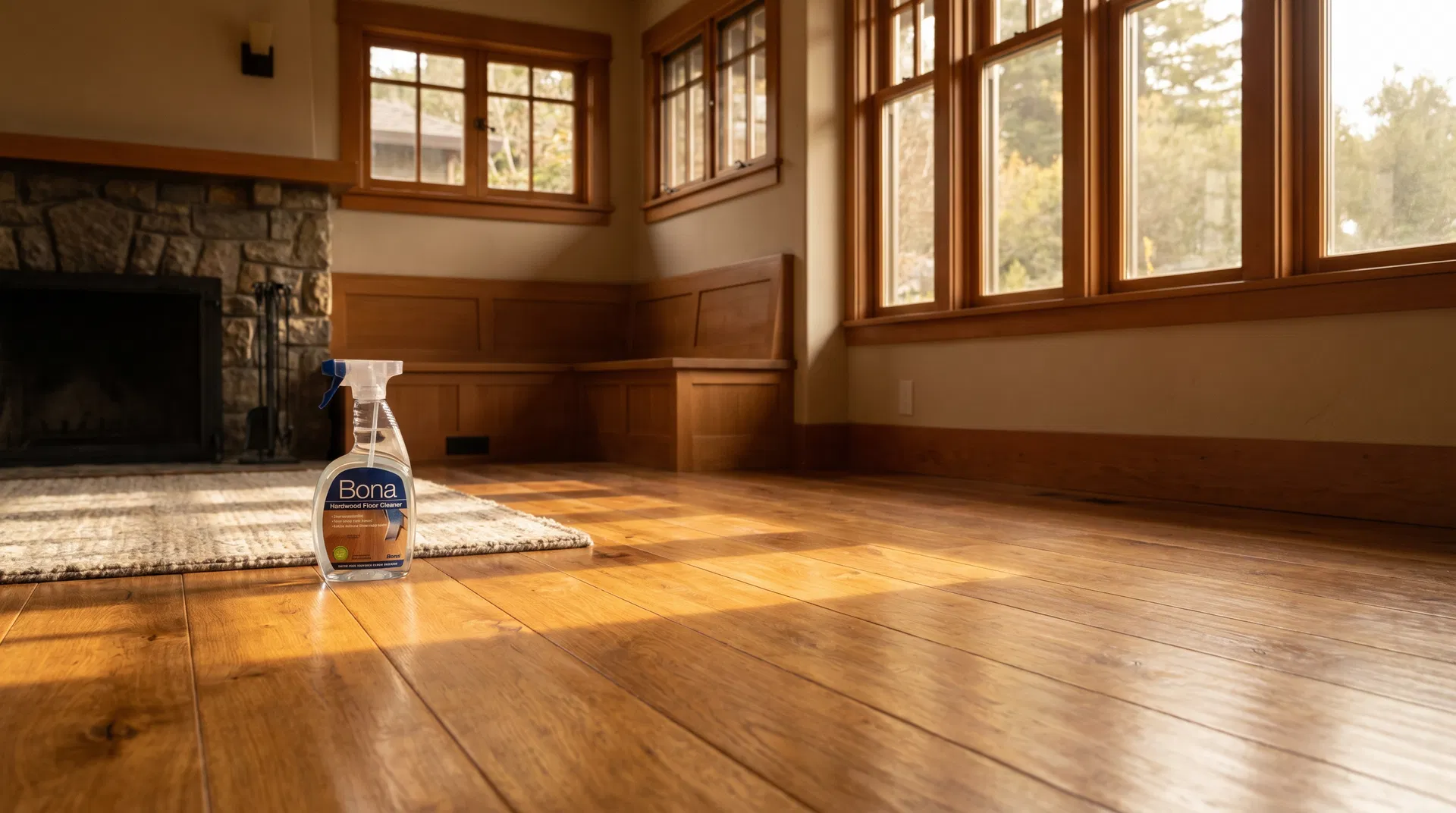
For sealed hardwood: dilute Bona Hardwood Floor Cleaner or Method Squirt + Mop according to directions. Wring the mop until it's barely damp — no standing water should remain on the floor after mopping. Work in the direction of the wood grain. Allow to air dry completely before foot traffic. For oil-finished hardwood: use Murphy's Oil Soap at the manufacturer's recommended dilution (approximately 1/4 cup per gallon of water).
Monthly: Inspect and Spot-Treat
Walk the floor in raking light (light from a low angle) to identify scratches, dull spots, or areas where the finish is wearing. Address scratches with a hardwood floor touch-up marker matched to the floor color. For dull spots on sealed hardwood, a small amount of Bona Polish (not cleaner — polish) applied with a microfiber applicator can restore sheen without refinishing.
Annually: Professional Deep Clean
An annual professional cleaning with a commercial-grade hardwood floor machine (buffing pad, not steam) removes built-up cleaner residue and restores the finish. This is particularly valuable for high-traffic areas in open-plan Bay Area homes. Green Planet Cleaning includes hardwood floor deep cleaning as part of our annual deep clean service.
5 Things That Damage Hardwood Floors (And Their Non-Toxic Alternatives)
Frequently Asked Questions
Let Green Planet Handle the Cleaning
Family-owned since 2010. 100% eco-friendly. Greentified™ Guarantee — if you're not happy, we re-clean for free within 24 hours.
Serving Marin County, San Francisco, Sonoma, Napa, San Mateo & Contra Costa.